
Build a 72-hour emergency kit around your household
A kit is an inventory, not a piece count. Start with three days of actual household needs and check what a packaged backpack leaves out.
Count the water before the accessories
US emergency-preparedness guidance commonly uses one gallon of water per person per day as a baseline for drinking and sanitation. For four people over three days, that baseline is 12 gallons, about 45 liters. Personal needs, heat and other conditions can increase the amount.
That water is heavy. A backpack with a few small pouches should not be assumed to supply an entire household for three days. Decide what stays at home and what can realistically be carried.
Compare quantities and usable functions
Count actual food portions and calories, not the number of wrappers or accessories. Check whether food needs extra water or cooking, then account for that in the water and fuel plan.
Useful basics include lighting, a radio, first-aid supplies, sanitation items, documents and a way to charge a phone. Verify the exact products rather than assuming a small flashlight or filter performs adequately because it appears in a kit photograph.
Add the things a generic kit cannot know
Review personal medication, glasses, infant supplies, pet needs, weather-appropriate clothing and copies of essential documents. Keep important information accessible to the people who may need it.
A home reserve and an evacuation bag have different weight and storage constraints. Try finding the items in darkness and carrying the actual loaded bag.
Open, check and maintain it
Inspect expiration dates, test lighting and charging, and learn how the supplied items work. Replace used or damaged supplies and review the inventory as the household changes.
A prepacked kit can make starting easier. Its most useful feature is a clear, accessible inventory that you can complete, rather than a promise that all future emergencies are covered.
Sources and scope
- Virginia Department of Health: emergency supplies
- Ready America 70380 four-person emergency kit: catalog details and documentation
- ReadyWise 64-piece emergency backpack: catalog details and documentation
Product comparisons describe the documented catalog, not physical testing by ZeroGridGear. Follow official local guidance, the exact equipment instructions and appropriate professional advice for your situation.
Explore the relevant equipment
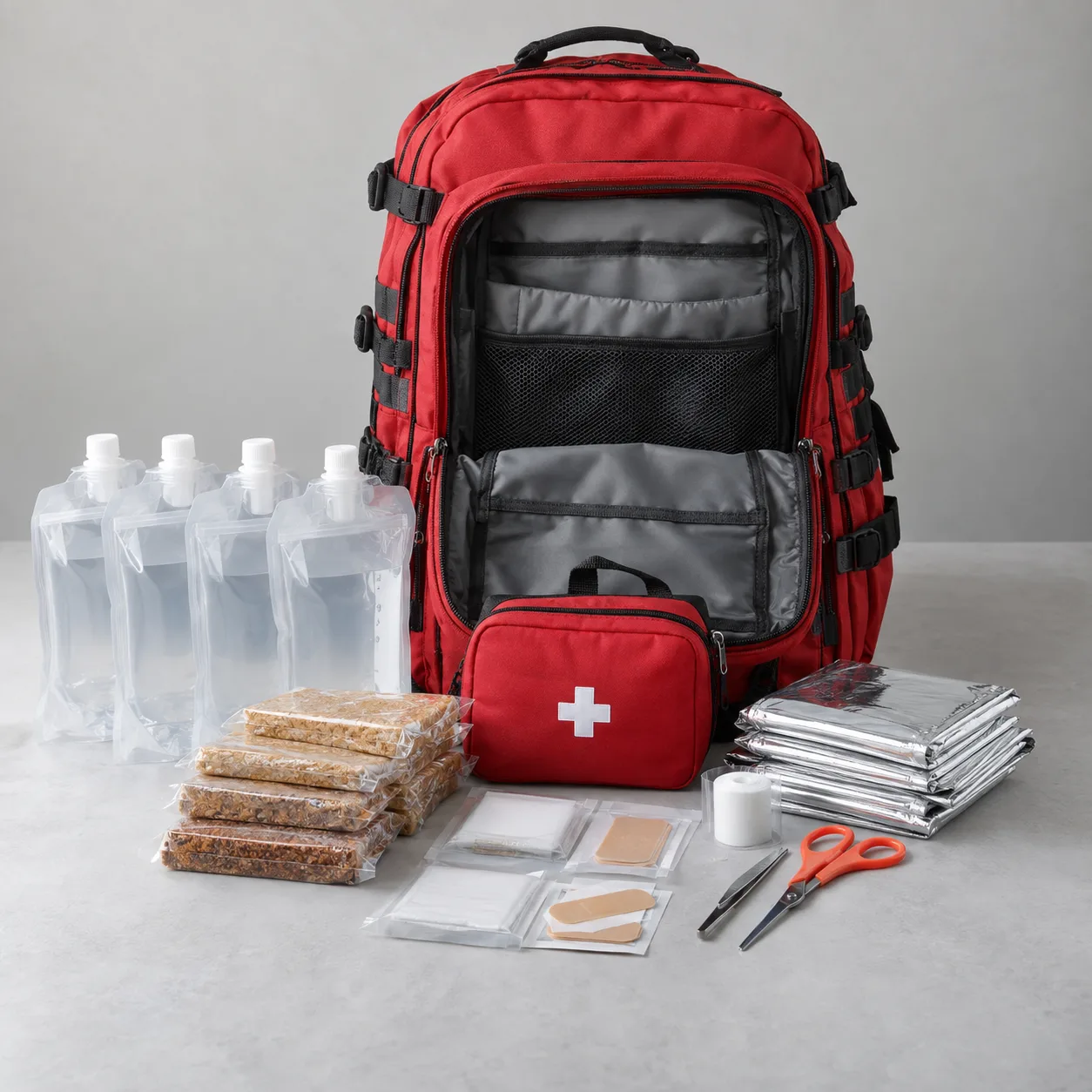 Illustration
Ready America 70380 four-person emergency kit
70380 kit; marketed for four people and 72 hours
A packaged emergency-kit reference marketed for four people and three days. The same 70380 ASIN was located on Amazon.com.
Read details and limits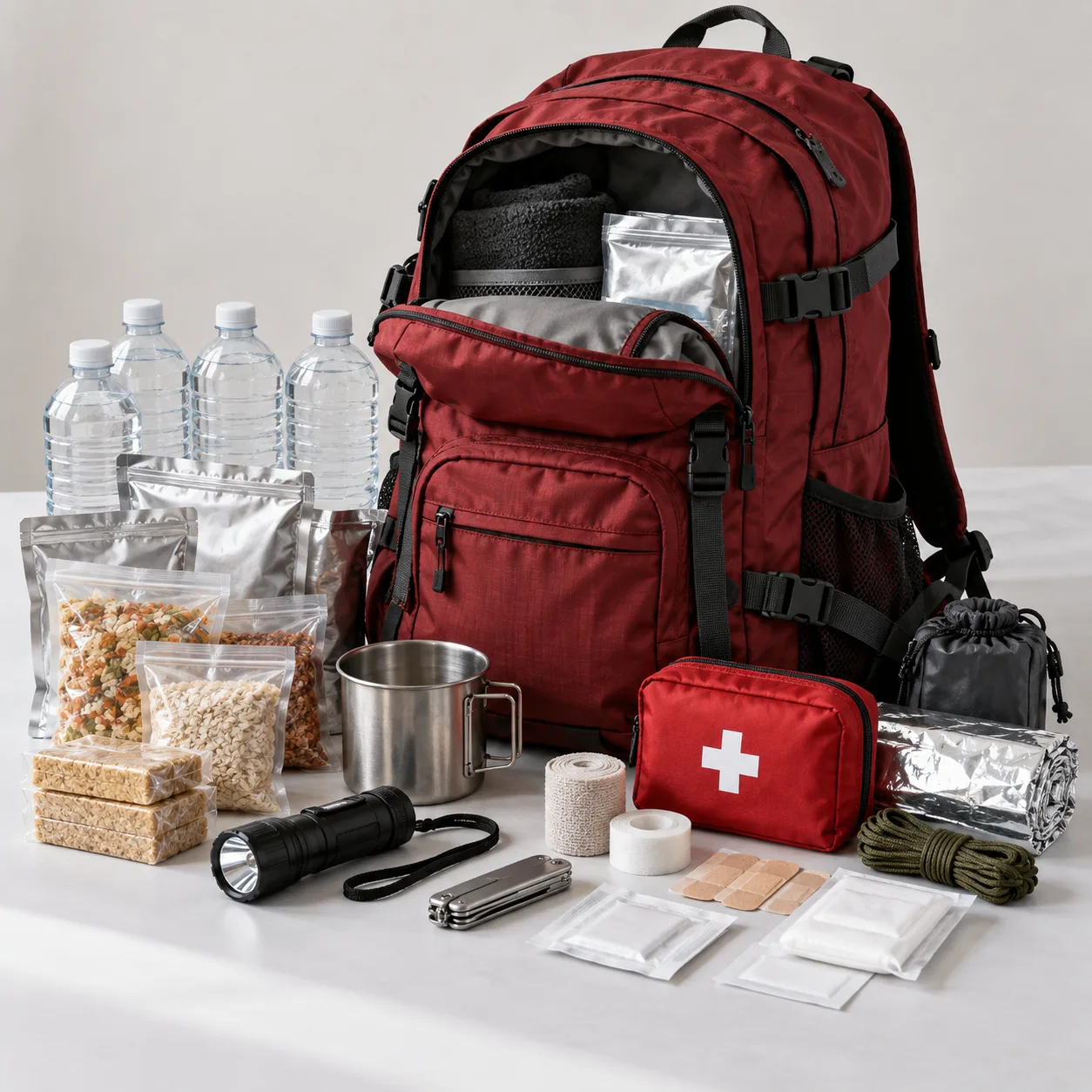 Illustration
ReadyWise 64-piece emergency backpack
Selected 64-piece backpack kit; contents must be checked
A ReadyWise backpack selected as a US alternative for an evacuation-supplies starting point.
Read details and limits